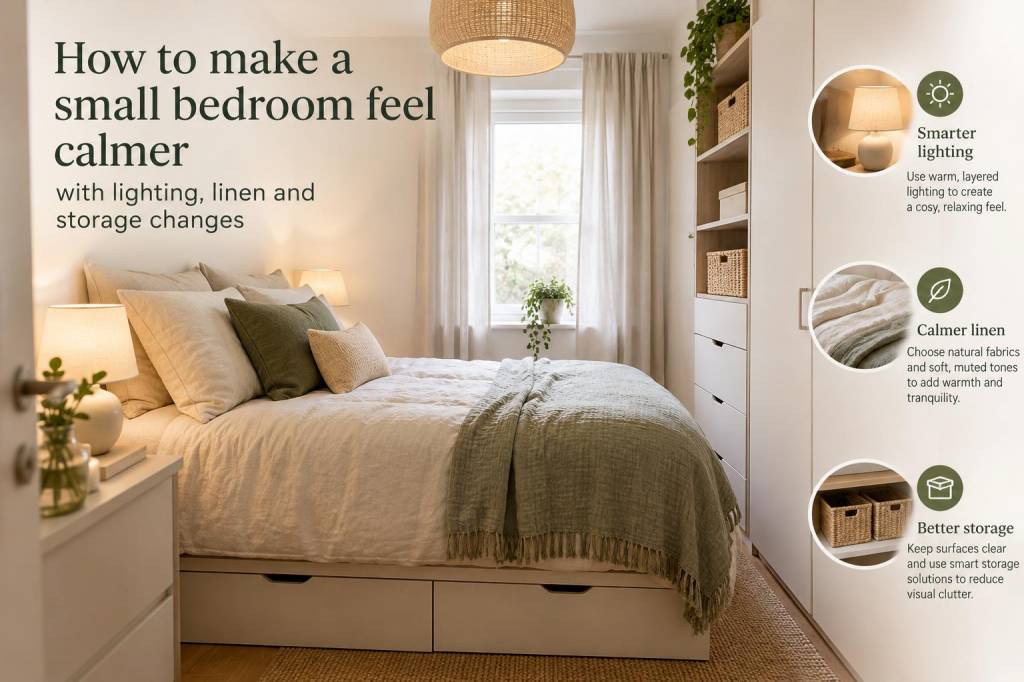
I have learned that a small bedroom does not need a full renovation to feel calmer. In my own home, the biggest shift came from three simple changes: softer lighting, better linen, and storage that stopped visual clutter from taking over every surface. When a room is short on square footage, every choice matters a little more, which is actually reassuring. It means small changes can make a big emotional difference.
What I wanted most was a bedroom that felt quiet when I walked in at night and gentle when I woke up in morning. I did not want a perfect showroom. I wanted a room that helped me switch off, breathe more slowly, and stop noticing every pile, cable, and harsh bulb. That kind of calm comes from reducing friction. If I can make getting into bed easier, finding things easier, and lighting softer, then rest starts to feel more natural.
Soft lighting changed feeling of room
Lighting was first thing I changed, and honestly, it made the biggest difference. A small bedroom can feel busy or tense if main light is too bright, too cool, or placed in a way that throws every corner into sharp relief. I used to rely on one overhead fixture, and it made room feel more like a utility space than a place to unwind.
I switched to layered light instead. That means I now use a mix of sources at different heights so room feels gentler and more flexible. A warm bedside lamp gives me enough light for reading without waking up whole room. I also added a softer lamp on a dresser, which creates a low glow in evening. If you can, choose bulbs with warm colour temperature rather than crisp white ones. Warm light feels less clinical and much more restful.
I also became more selective about where I place light. In a narrow room, a lamp pointing straight at a wall can create a lovely washed effect and make space feel more open. A lamp with a fabric shade can soften shadows in a way that instantly takes edge off a room. I prefer lighting that feels slightly indirect, almost like it is flattering room rather than exposing it.
If you are renting or cannot change fixtures, small adjustments still help. I have used plug-in wall lights, clip-on reading lamps, and even simple smart bulbs that let me dim light without changing a single socket. One of my favourite tricks is using just one lamp in evening, instead of lighting whole room at once. It feels calmer because room is not asking for attention.
Linen can quietly change mood of room
Bedding is another place where calm either appears or disappears. In a small bedroom, bed takes up a lot of visual space, so fabric choice really matters. I used to think I needed lots of decorative layers to make room feel styled, but I now know that fewer, better pieces create a more restful look.
I usually begin with natural-feeling linen or cotton in muted colours. Soft white, stone, oat, pale grey, and dusty blue all work well for me because they do not compete with other elements in room. Linen has a relaxed texture that looks lived-in without looking messy, which suits a small room beautifully. Even when bed is not perfectly made, linen still feels intentional.
I also pay attention to weight. In warmer months, I use lighter layers so bed does not dominate room visually. In colder months, I add one textured throw instead of several extra cushions. That single change keeps bed inviting while avoiding bulk. A bedroom can feel calmer when textile choices are edited, not crowded.
Something else I noticed is that matching does not matter as much as harmony. I do not need every item to be identical, but I do want fabrics to speak to each other quietly. A crisp cotton sheet, a linen duvet cover, and a knitted throw can work together if colours stay close and patterns stay subtle. Strong prints can be lovely, but in a tiny room they can pull focus in a way that feels restless.
I also wash and store bedding with calm in mind. Fresh linen should smell clean, not overloaded with fragrance. I prefer a light detergent and, if I use anything scented, a very soft note rather than anything overpowering. There is something about climbing into bed and feeling that fabrics are clean, breathable, and uncomplicated. It changes entire evening mood.
Storage that disappears makes room feel larger
Storage is not only about hiding things. It is about removing visual noise. In a small bedroom, even useful items can make room feel crowded if they are always on display. I have found that calm storage is storage you almost do not notice.
My first step was to stop keeping unnecessary things on surfaces. I do not need every book, lotion, charger, and accessory visible at once. I use closed storage for anything I do not want to look at daily. A bedside table with a drawer is far more useful to me than an open shelf, because it lets me keep essentials close without turning bedside area into clutter.
Under-bed storage is another quiet hero. I like low-profile boxes for out-of-season clothing, spare bedding, or items I use rarely. If containers are neat and uniform, they feel much calmer than a random mix of bags and boxes. I also keep things in categories so I can find them quickly. That reduces the chance of opening drawers and feeling overwhelmed.
Wardrobe organisation matters too. I try to keep only current-season items visible, and I hang similar pieces together. When clothes are arranged by type or colour, room feels more ordered even before I have done a deep clean. I am not a perfectionist about this, but I do notice the difference when everything has a clear place.
Here is what I keep in mind when storage needs to feel calm rather than crowded:
- Choose closed storage whenever possible for visual simplicity
- Use matching containers so storage looks intentional
- Keep bedside surfaces as clear as possible
- Store only current essentials within easy reach
- Hide cables in a box, basket, or behind furniture
- Use under-bed space for items you do not need every day
Small edits that make room feel softer
Once light, linen, and storage were in better shape, I started noticing smaller details that influenced calm far more than I expected. A small bedroom can feel tense when every surface is competing for attention, so I became more deliberate about what stayed in sight. One framed print, one candle, one plant, or one ceramic bowl can be enough.
I also became more careful with colour. I am not saying a bedroom must be neutral to feel peaceful, because that would be boring and false. But I do find that even richer colours feel calmer when they are repeated in a restrained way. If I add a deep green cushion, I might echo it with a plant or a small decorative item so it feels integrated rather than random.
Mirrors can help too, especially in tight spaces. I like one mirror that reflects light without becoming a focal point. It can brighten room and create feeling of depth, but I do not want mirrors everywhere. Too many reflective surfaces can make a small room feel busy rather than serene.
Another thing I do is protect visual quiet near bed. I keep a tiny tray for rings, lip balm, and earrings, because loose items scattered across bedside table make room feel less settled. I also avoid piling clothes on chair, which I know is a classic habit. If I need a temporary landing place, I use a basket with a lid or keep a simple hook behind door. That one habit alone changes atmosphere more than people expect.
A calm bedroom rhythm feels more important than perfection
What I love most about making a small bedroom calmer is that it has less to do with buying a lot of new things and more to do with noticing what my room asks from me. When lighting is softer, linen is easier on eye, and storage is under control, I do not have to work so hard to relax. Room supports me instead of distracting me.
I also think calm is easier to maintain when it is built into daily rhythm. I try to straighten bed in morning, put away visible clutter before evening, and keep lighting low once day is done. None of that is dramatic, but it keeps bedroom feeling like a place where mind can slow down. For me, that is really point.
| Area | What I changed | Effect on room |
|---|---|---|
| Lighting | Swapped harsh overhead light for warm lamps and dimmable bulbs | Room felt softer, less exposed, more restful |
| Linen | Used muted cotton and linen in lighter, quieter colours | Bed looked calmer and took less visual space |
| Storage | Added closed storage and reduced items on surfaces | Room felt tidier, larger, and less mentally noisy |
| Decor | Kept accessories minimal and repeated colours sparingly | Space felt more intentional and less cluttered |
If I were starting again from scratch, I would begin with light, then bedding, then storage. Those three things shape mood more than most of us realise. A small bedroom can still feel generous, restful, and quietly beautiful when every choice is doing a little less and feeling a little more thoughtful.