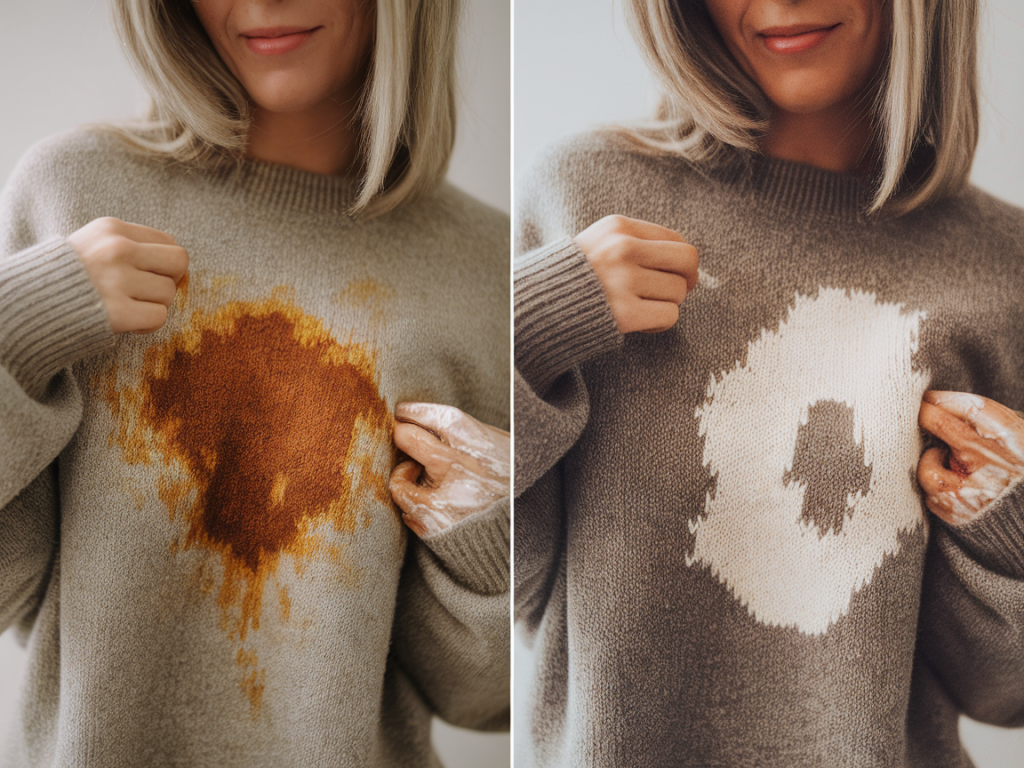
I once ruined a favourite wool jumper by absentmindedly wearing it while chopping beets for a salad. By the time I noticed the deep magenta blotches, I had that familiar moment of panic — followed by the choice to either mourn it or try to fix it. I tried a few gentle, kitchen-friendly tricks that actually worked, and over the years I’ve refined a simple, no-fuss rescue routine that uses pantry staples and a gentle hand. Here’s what I do when a wool jumper needs saving.
First things first: assess the damage and act quickly
Wool is forgiving but also delicate. The quicker you address a stain, the better the chance of getting it out without damaging fibres. When you find a stain, I always follow this checklist in my head:
If the care label says “dry clean only,” I still try gentle, at-home spot treatments first for small marks — but I avoid aggressive scrubbing and bleaching. If in doubt about a cherished heirloom, a professional cleaner is the safest bet.
What I keep in my “wool rescue” kit (pantry-friendly)
Everything below is normally in my kitchen or bathroom cupboard. These staples are effective, gentle, and unlikely to harm wool when used carefully.
I also keep a small bottle of a wool-specific detergent (I like Eucalan or Wool & Cashmere wash) for full-hand washes, and a soft-bristled toothbrush that’s reserved just for fabric work.
Step-by-step stain rescue for common types
Below are the treatments I’ve found most reliable. Always work from the outside of the stain inward to avoid spreading it.
How to spot-test and avoid common mistakes
Wool can react unpredictably to acids or alkalis, so I always spot-test on an inside seam or hem. Put a tiny drop of your chosen solution (vinegar, diluted dish soap, lemon) on the test area, wait a few minutes, blot, and check for colour change or fibre damage.
Quick reference: which pantry item for which stain
| Stain type | Pantry treatment | Notes |
|---|---|---|
| Oil/Grease | Baking soda, diluted dish soap | Absorb first, then spot-clean; rinse thoroughly |
| Blood/Sweat | Cold water, salt, then vinegar if needed | Use cold water only |
| Red wine/Beetroot/Coffee | White vinegar or club soda, then cold soak | Blot immediately; repeat gently |
| General dinginess | Wool wash or mild soap + vinegar soak | Restores fibre softness |
Finishing touches and wool TLC
Once the stain is gone (or dramatically improved), I give the jumper a gentle reshape. I lay it flat on a towel, roll the towel to press out excess water, unroll, reshape the jumper to its original dimensions and lay it flat to dry on a drying rack. I never hang a wet wool jumper — weight stretches it out.
For pills and fuzz, I use a light touch with a fabric comb or an electric pill remover. If the knit has become a little coarse after spot-cleaning, a tablespoon of white vinegar in the final rinse helps soften fibres. For truly fragile knits, steaming gently with a handheld steamer (held a good distance away) can relax fibres without soaking them.
When to call the pros
If the stain is large, oxidised (rust), or the garment is labelled “dry clean only” and very precious, professional cleaning is worth the cost. Also consider a pro if you’re worried about a high-contrast colour change — some dyes simply won’t come back from certain treatments.
I’ve rescued more than one jumper with these simple, pantry-based methods. Some marks needed patience and multiple gentle passes, and a few were impossible — but I’ve saved enough favourites to know the approach is worth trying. Keep a calm hand, a little time, and these staples nearby, and your wool wardrobe will thank you.