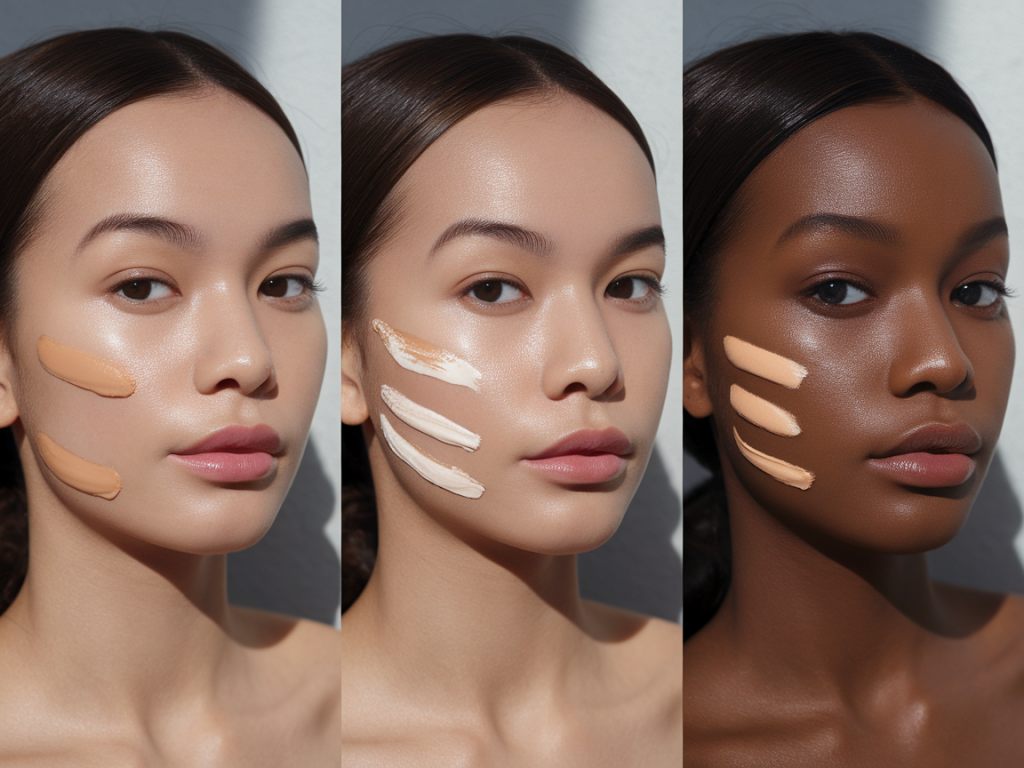
I’ve been using the same high-end foundation as my daily go-to for years. It’s the kind of product that sits in my makeup drawer with a little dent in the bottle—trust earned through packaging, finish and the way it survives a long day of meetings followed by coffee dates. But one rainy afternoon I found myself staring at the budget section and wondering: can a £30 foundation actually beat my high-end pick? Instead of a one-off swatch test, I decided to put a £30 contender through a proper, honest trial. Below is the three-step method I used and the real-wear results from a full day on my skin.
Why I bothered to test
There are a few reasons I wanted to do this properly. First, beauty budgets shift—sometimes you want more product for less money, and sometimes you want to ease up on splurges. Second, product formulas have improved a lot; mid-range brands are offering results that once belonged exclusively to premium lines. And finally, I know my readers want practical, no-nonsense comparisons: not just “it looks nice” but “does it survive real life?”
My skin, routine and criteria
Full transparency: I have combination skin with a slightly oily T-zone and dry cheeks, a few visible pores on my nose, and a tendency for redness across my cheeks. My high-end staple is a satin-matte, medium-buildable foundation that wears 9–10 hours without separating. For the test, I set three criteria:
- Shade match & initial finish — Is the colour and surface finish flattering straight away?
- Wear & transfer resistance — How does it hold up over time (4h, 8h) and does it transfer?
- Skin comfort & longevity — Does it emphasize texture, pill, or feel heavy by day's end?
The products I tested
I chose a familiar high-end formula I've worn for two years and a newer £30 foundation that’s been getting buzz for its skin-like finish. I won’t be overly brand-obsessive here—what matters is the performance—but names can be useful:
- High-end go-to: (My longtime pick) a satin-matte, medium-buildable foundation with proven longevity.
- £30 contender: (Mid-range new favourite) marketed as a "buildable demi-matte with hydrating properties."
Both were matched as closely as possible to the same shade. I prepped my skin identically for each test day to keep variables minimal.
My three-step testing method
I wanted consistency, so I designed a simple three-step protocol I could repeat:
- Step 1 — Prep and shade match: Cleanse, moisturise and apply the same lightweight SPF/primer. I used a hydrating toner, a lightweight moisturizer and a thin layer of silicone-based primer to mimic my normal routine.
- Step 2 — Application & immediate check: I applied each foundation with the same tools (a damp sponge and a dense buffing brush to layer) using exactly 1 pump for the initial layer and noted coverage, finish and blending behaviour.
- Step 3 — Real-wear checkpoints: I photographed and logged observations at application (0h), after 4 hours (midday), and after about 8–10 hours (evening). I wore normal clothes, drank coffee, took public transport and went about my usual day to test transfer, oxidation, and comfort.
How I applied them
Application matters as much as formula. For both foundations I:
- Applied primer only to forehead, nose and chin (my usual T-zone primer spots).
- Patted 1 pump with a damp beauty sponge for skin contact, then buffed lightly with a dense brush in areas needing more coverage.
- Used the same concealer and a light dusting of translucent powder only on my nose and under the eyes to set.
This kept coverage and mattifying steps consistent so I could fairly judge the base product.
Immediate results (0h)
Both foundations blended well and matched my neck with minimal adjustment. The high-end formula offered a slightly more effortless initial blend—almost like it melted into the skin—giving a very natural satin finish. The £30 contender had a similar first impression but read a touch more dewy at first. With the same powder set, both settled into a natural skin-like surface. Coverage-wise, both were medium and buildable to medium-full without looking cakey.
Midday check (4h)
By the four-hour mark, differences started to show. My T-zone was subtly shinier with the £30 option compared to the high-end bottle, but it hadn’t broken apart or separated. There was minimal transfer on my coffee cup—slight traces on the rim with the £30, almost none with my high-end pick. The £30 still looked fresh on my cheeks and didn’t emphasize dry patches, which surprised me; many mid-range formulas can cling to dryness.
Evening check (8–10h)
At the end of the day the high-end foundation retained a very even skin texture with only minor shine on the nose. My makeup looked rested and still photo-ready. The £30 foundation had lost a little coverage around the sides of my nose and between my brows and showed a touch more shine overall, but it hadn’t separated into fine lines or faded patchily. It felt slightly lighter on the skin, which some days I prefer.
Transfer, texture and comfort
Neither foundation felt heavy or caused irritation. The high-end formula felt ever so slightly more "filmy" on top of the skin after hours, whereas the £30 felt more like a second-skin, breathable layer. Texture-wise, both avoided accentuating pores dramatically; the high-end smoothed a bit more, while the £30 looked more like natural skin—slightly forgiving but less airbrushed.
Quick comparison table
| Criteria | High-end go-to | £30 contender |
|---|---|---|
| Initial finish | Satin-matte, seamless | Demi-matte, slightly dewy at first |
| 4-hour wear | Minimal shine, intact coverage | Noticeable, controlled shine; slight transfer |
| 8–10 hour wear | Very even, minimal touch-ups needed | Coverage lightened in T-zone; comfortable |
| Comfort on skin | Feels slightly more substantial | Feels lightweight, breathable |
| Price | High-end price point | £30 |
My practical takeaways (what this means for you)
If you’re after an everyday foundation that looks like skin and doesn’t require frequent touch-ups, the £30 option is genuinely impressive. It gives a lovely, second-skin finish, feels comfortable and won’t let you down for most days—meetings, coffee runs and casual evenings. If you live in a warm climate, have extremely oily skin, or need absolute longevity for long, busy days or special occasions, your high-end formula still edges ahead for me—fewer touch-ups and less transfer.
A few final practical tips from testing:
- Shade-match in natural light and test for oxidation—both formulas darkened a tiny bit on me after an hour.
- Use a light hand with powder: both perform better when only targeted areas are set.
- For oily T-zones, a mattifying primer (applied sparingly) can help the £30 contender last closer to the high-end’s longevity.
Whether you keep your splurge-worthy bottle or embrace the £30 find, the joy is in choosing what works for your life—what looks good, feels good and fits your routine. I’ll keep reaching for both, depending on the day. If you want a post where I test a few more mid-range options against multiple high-end favourites, tell me which price points you’re curious about—I’m always keen to keep experimenting.