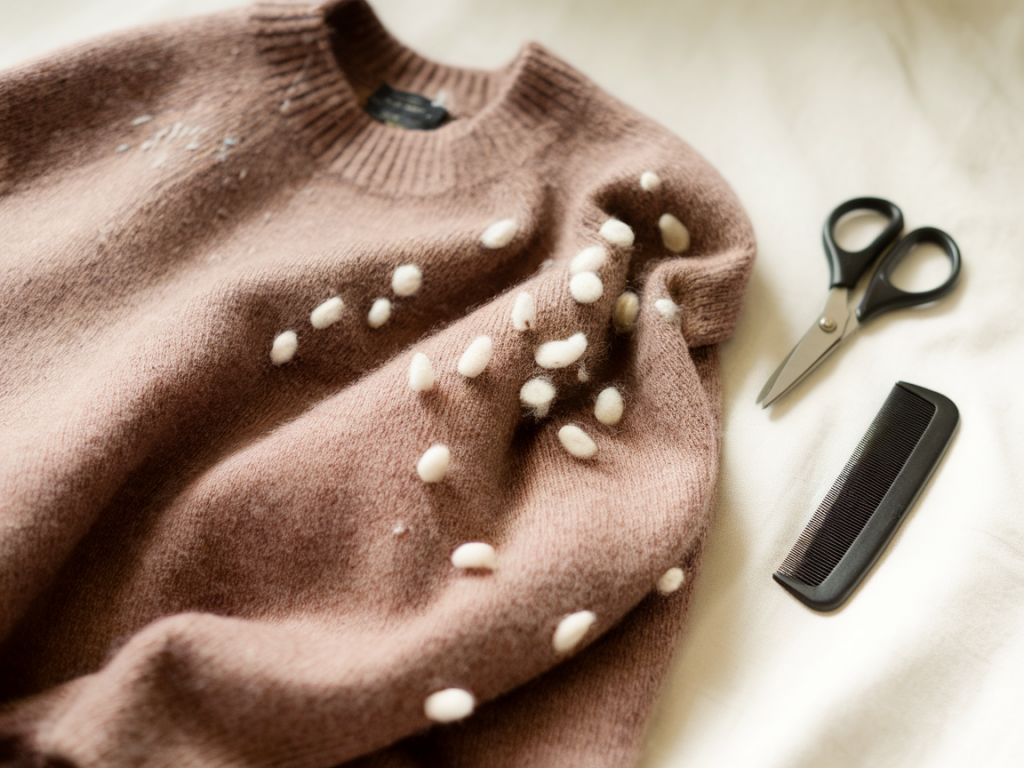
I always treat my cashmere jumpers like little acts of self-care — soft, cozy and worth holding on to. But after a season or two, even my favorites start to show tiny bobbles and pills that make them look tired. Over the years I’ve learned how to nurse cashmere back to life at home so it feels and looks almost new again. Below I share practical, gentle methods I actually use, tools I recommend, and a few preventative habits that keep a jumper in great shape for years.
Why cashmere pills — and why that’s not the end of the world
Pilling happens when fibres rub together and form little tangles. With cashmere, which is made of naturally short, soft fibres, this is perfectly normal — especially in areas that see friction like under the arms, along the sides, or where bag straps sit. The good news is pills are surface-level damage. Remove them carefully and you can revive the jumper without harming the fabric.
What I keep in my cashmere toolkit
Here are the tools and products I reach for. I keep them together so a quick wardrobe rescue is always possible.
- Sweater comb or cashmere stone — a gentle way to lift pills without cutting fibres. Brands like Unique Loom and Gulliver make good combs; Knit Picks and Cashmere Care sell nice stones.
- Fabric shaver / de-piller — battery or plug-in devices (e.g., Philips, Gleener) are fast and effective on larger areas. Use on the lowest setting and be gentle.
- Fine scissors — for precise snips of stubborn pills or loose threads. A small embroidery scissor is ideal.
- Lint roller or soft brush — removes surface dust and loose fibre before de-pilling.
- Wool detergent — a gentle cleanser like Eucalan, The Laundress Wool & Cashmere Shampoo, or a mild baby shampoo.
- Flat towel and drying surface — to reshape and air-dry a jumper without stretching.
Step-by-step: how I de-pill a cashmere jumper
Before you start, check the care label. If the brand explicitly warns against mechanical de-pilling, consider professional cleaning or mending. For most cashmere though, here’s my routine:
- Lay the jumper flat — on a clean surface, smoothing out wrinkles. I work on a table with a large towel underneath.
- Brush or lint-roll — remove any surface dirt or loose fibres so pills are easier to see and collect.
- Start with a sweater comb or stone — gently glide it across the pilled areas. Hold the fabric taut (but not stretched) with one hand and comb with the other. This lifts the pills away without cutting fibres.
- Use a fabric shaver for larger areas — if you have a sweater that’s heavily pilled, a few light passes on a low setting speeds things up. Don’t press down hard; let the blades skim the surface.
- Trim tiny snags — for single stubborn bobbles, very carefully cut the top of the pill with small scissors and then de-pill the area. Keep the blade parallel to the fabric to avoid cutting the jumper itself.
- Finish with a soft brush — a natural bristle brush smooths the nap and brings back the buttery surface of the cashmere.
How to repair holes and loose seams
Pilling is cosmetic; holes need a gentler, slightly more technical approach. I do small repairs at home and leave major reweaving to a pro.
- Tiny holes — use a needle and matching fine yarn. I anchor the thread a little inside the seam and use small mattress-stitch-like pulls to close the gap. Knot securely but very small, then trim excess thread.
- Split seams — if a shoulder or side seam pops open, I re-stitch using a fine needle and matching thread, keeping stitches small and invisible. For visible seams, use a backstitch for strength.
- Large holes or worn patches — I prefer to send these to a mender who can reweave or patch with invisible technique. Many local tailors or specialist services (search for "cashmere reweaving") do an excellent job.
Washing and reshaping — the part that really refreshes
After de-pilling and repairs, a careful wash can make the jumper feel as soft as new. I don’t wash cashmere after every wear — usually every 4–6 wears unless it’s stained.
- Fill a sink or basin with lukewarm water (never hot) and a small amount of wool detergent.
- Turn the jumper inside out and gently submerge, pressing water through the fibres without rubbing or wringing. Soak 5–10 minutes.
- Rinse with clean water until suds are gone. Again be gentle.
- Lay the jumper flat on a towel, roll the towel up to absorb excess water. Don’t twist or wring.
- Reshape the jumper to its original dimensions while damp, smoothing sleeves and hems, then lay flat to air-dry away from direct heat or sunlight.
Quick fixes when you’re in a hurry
If you forgot your sweater stone at home and need a fast rescue:
- Use a disposable razor lightly on very small areas — with great caution and a steady hand.
- Sticky tape or a lint roller can tidy surface fluff before you can do a full de-pill.
- Wear a camisole underneath to reduce friction against the skin and slow pilling underarms.
Storage tips that actually help
How you store cashmere affects pilling and moth damage. I learned the hard way when I found holes after a summer storage mishap.
- Fold jumpers — never hang them long-term; hangers stretch shoulders.
- Store in breathable cotton bags or drawers with lavender sachets or cedar blocks (not mothballs). Refresh the cedar every few months.
- Rotate wear so the same pieces don’t bear all the friction season after season.
Tools comparison at a glance
| Tool | Best for | Care notes |
|---|---|---|
| Sweater comb / stone | Small to medium pill removal | Gentle, manual — ideal for delicate cashmere |
| Fabric shaver | Large, heavily pilled areas | Use on low setting; test first on an inside seam |
| Fine scissors | Snags and precise trimming | Work slowly to avoid cutting the base fabric |
My favorite little rituals
After rescuing a jumper I always take a moment to enjoy the result — it’s oddly satisfying. I’ll brush it lightly, fold it with tissue paper between layers if I’m storing it, and whisper a tiny promise to wear it more carefully next season. Maintaining cashmere isn’t about perfection; it’s about respect for clothes that make us feel good.
If you’d like, I can share a short checklist you can print and keep in your closet, or recommend a few affordable fabric shavers and sweater stones I trust. Just say the word and I’ll pop together my tried-and-tested picks.