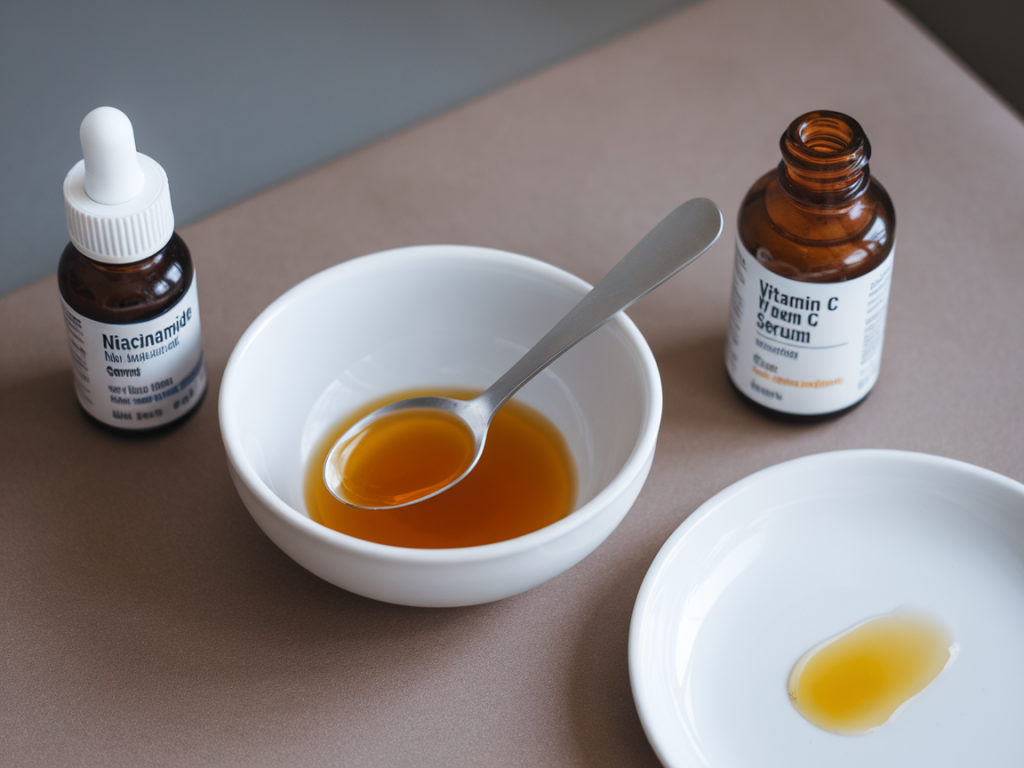
I’ve been in the habit of testing skincare ingredients like I test coffee shops — with curiosity, not blind loyalty. Redness is one of those skin issues that feels both personal and universal: sometimes it’s a blush of irritation, sometimes it’s long-standing rosiness that home remedies don’t touch. Two ingredients come up again and again when people ask me what to try first: niacinamide and vitamin C. Which is better for redness? The short answer is: it depends. The rest of this post is a simple, practical test you can do at home (and the reasons behind it) so you can decide which serum to keep on your shelf.
Why these two? A quick, non-scientific primer
Niacinamide (vitamin B3) and vitamin C (ascorbic acid and its stable derivatives) are both beloved for good reasons. Niacinamide is praised for barrier support, calming inflammation, and reducing visible redness over time. Vitamin C is famous for brightening, antioxidant protection, and helping with discolouration — and some forms can reduce inflammatory responses too.
But they work in different ways. Niacinamide is often the gentle, steady friend that helps skin look less reactive. Vitamin C is more of a targeted powerhouse: it can address redness caused by post-inflammatory hyperpigmentation and oxidative stress, but some forms (especially high-concentration L-ascorbic acid) can sting on sensitive or compromised skin.
How I test a serum for redness — a simple at-home protocol
I recommend a two-week per product patch-and-spot test so you can see realistic results without overwhelming your routine. Here’s the method I use and share with friends:
What improvements to look for
Redness can come from different causes, so define what “better” means for you:
Brands and formulations I’ve personally tried
To make this practical, here are a few serums I’ve used on and off over the years:
These are examples; the key is to choose a concentration you’re comfortable with. For vitamin C, if you’ve never used it before, start with a lower concentration or a derivative like magnesium ascorbyl phosphate.
Can you use them together?
Yes, often you can — but patience and layering matter. If both are tolerated, apply vitamin C in the morning for antioxidant protection (followed by SPF), and use niacinamide in the evening to support barrier repair. If you prefer both in one routine, use the vitamin C first (on clean skin) and wait a few minutes before applying niacinamide. Some people report flushing when mixing high concentrations, so if that’s you, alternate mornings and evenings instead.
Things to watch for and safety tips
When treating redness, there’s a fine line between improvement and irritation. A few pointers:
A little anecdote from my own routine
I once had a week of travel-induced redness — stress, a change in water, and a couple of irritating facial masks. I did a mini-test: two days of niacinamide in the evening and vitamin C in the morning. The niacinamide smoothed the reactive patches and reduced tightness after about five days; the vitamin C helped with the slightly pink spots that were darker afterward. The combination wasn’t dramatic, but it returned my skin to calm and even tone faster than doing nothing.
Quick comparison table
| Ingredient | Best for | Possible downsides | How I use it |
|---|---|---|---|
| Niacinamide | Reactive redness, barrier support, texture | Too-high concentrations can feel heavy; rare flushing | Evening serum or layered with moisturizer |
| Vitamin C | Post-inflammatory discolouration, antioxidant protection | Can sting on broken or very sensitive skin; some formulas unstable | Morning antioxidant, followed by sunscreen |
If you try this little test, I’d love to hear what you discover — which serum calms your skin, which one brightens the stubborn spots, and what combinations end up in your routine. Testing deliberately and kindly is my favourite way to find what works — skincare that serves you, not the other way around.