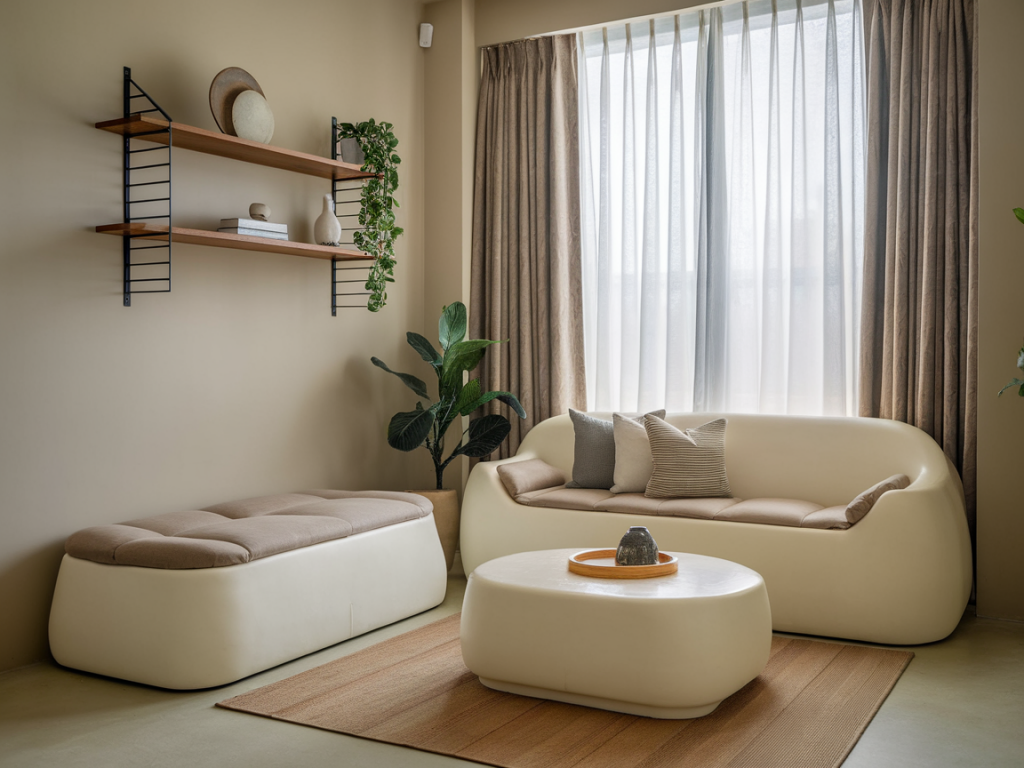
I’ve always believed that a room doesn’t need a huge budget to feel considered — it just needs a few thoughtful edits. Over the years, my living room has been through tiny transformations: swapping lamps, layering textiles, and experimenting with prints. Each small change made a disproportionate difference to the overall vibe, proof that you can make your space read like a designer’s for a fraction of the price.
Start with light — it changes everything
Good lighting is the fastest way to elevate a room. For a long time I lived with a single overhead fixture and dim afternoons; once I introduced layered light the space felt instantly curated. I now recommend combining three types of light:
I like lamps with dimmers — they cost a little more but offer instant mood control. Brands like IKEA and Argos have affordable dimmable options that read designer when paired with brass or matte black detailing.
Invest in textiles, not just furniture
Swapping soft furnishings is one of the most cost-effective ways to inject personality. I treated myself to a new rug once and it anchored the entire room. Rugs, cushions, and throws create layers that look expensive without the price tag.
Swap small hardware for a high-end finish
Changing drawer pulls, lamp shades, or curtain rods is transformative and simple. I replaced my old brass knobs with matte black ceramic ones and it felt like a mini renovation. Hardware is inexpensive and instantly adds personality.
Play with paint — even a small area matters
You don’t need to paint an entire room to see a designer impact. I painted the inside of my built-in shelving and a single accent wall a deep, warm grey and suddenly my bookshelf styling popped.
If you’re nervous about colour, test a large poster-board swatch on the wall at different times of day to see how light affects the tone.
Artwork and mirrors: scale and placement matter
Art is one of my favourite finishing touches. You don’t need original pieces — well-composed prints, thrifted frames, or a gallery wall of unframed images can look very refined when curated.
Styling surfaces — less clutter, more story
Designer rooms often feel edited. I try to keep surfaces layered but not crowded, using a few objects to tell a story rather than filling every inch.
Bring in plants — they make a room breathe
Plants are my secret weapon. A single large plant like a fiddle leaf fig or monstera can read like a styling statement, while smaller potted herbs or succulents add life to side tables. If you don’t have a green thumb, try resilient options like snake plant, ZZ plant, or artificial greenery that looks realistic.
Choose one statement piece
You don’t need every item to be special — pick one statement piece and let the room build around it. For me it was an oversized vintage mirror; for others it could be a sculptural armchair, a bold rug, or a distinctive light fitting. When everything else is restrained, that one piece pops and gives the space a designer edge.
The power of maintenance
Small changes are only effective when you keep them looking intentional. Regularly vacuum rugs, rotate cushions, dust shelves, and replace tired bulbs. I set a 15-minute tidy each night to keep my living room feeling calm and collected — it’s a tiny habit with a big payoff.
Quick checklist to get started
| Lighting | Introduce layered lighting and a dimmer |
| Textiles | New rug, cushions, and at least one throw |
| Hardware | Replace knobs, switch covers, curtain poles |
| Colour | Paint an accent area or the inside of shelves |
| Artwork | Hang at eye level; lean a mirror for light |
| Styling | Edit surfaces to 3–5 meaningful objects |
| Greens | Add a mix of real or faux plants |
Small shifts compound. When I started treating my living room like a stage — focusing on light, texture, and a few elevated details — the whole space felt more intentional. You don’t need a full renovation to get that designer-for-less look; you just need a little curiosity, a few swaps, and the confidence to edit down to what truly makes you happy in your space.