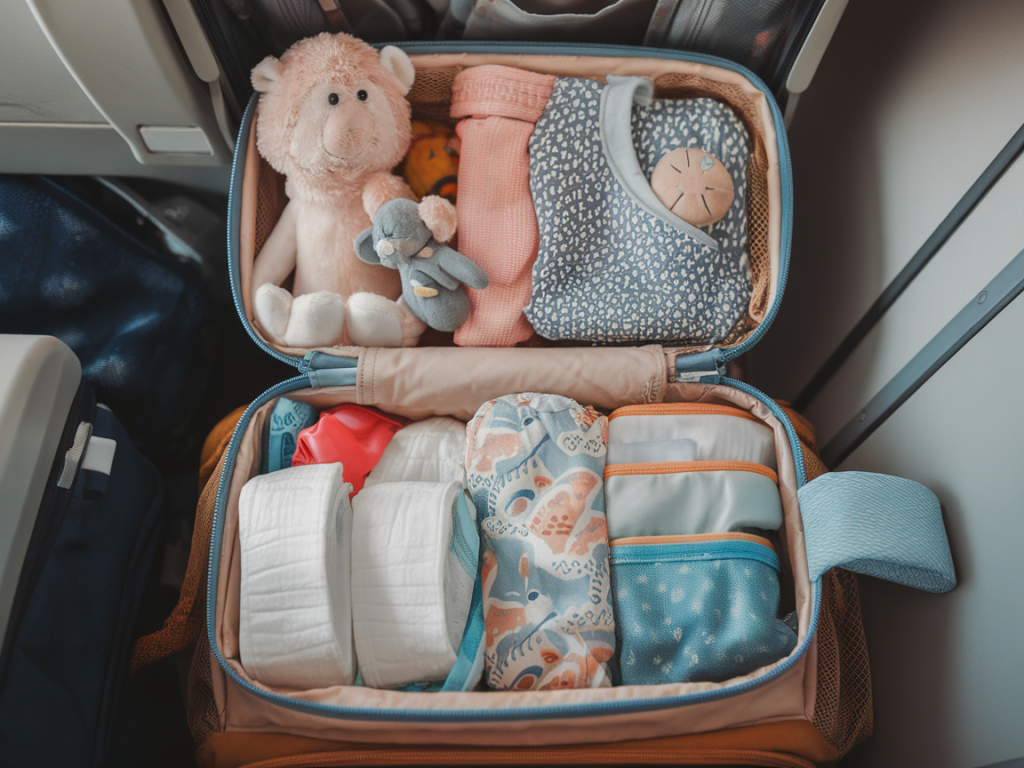
Long-haul flights with a toddler can feel like planning a small military operation — but over the years I’ve learned that how you pack the carry-on matters more than how much you cram into it. I now think of my toddler carry-on as three distinct zones that each serve a clear purpose: Sleep, Comfort & Entertainment, and Essentials & Emergencies. When each zone has its own place, it’s easier to find what you need without waking the whole row or losing your cool mid-air.
Sleep zone: make the plane feel like bedtime
The sleep zone is where I keep everything that helps my little one fall asleep and stay asleep. For me, this is the most important area — a toddler who sleeps is everyone’s favourite travel companion.
- Favourite blanket and sleep toy: These are non-negotiable. I bring the small blanket my toddler actually uses at home (not the oversized one) and the one cuddly toy that helps with self-soothing.
- Travel pillow or rolled-up neck cushion: I use a compact inflatable pillow in case my child needs head support. Some parents prefer the cosy Boppy or a bamboo travel neck pillow — whatever mimics the home setup.
- Portable white noise: A tiny white noise machine or an app on my phone with an airplane-safe speaker. There are clip-on white noise machines made for strollers that are perfect and unobtrusive.
- Sleep scent: A small rollerball of lavender oil (diluted for toddlers) can be a calming cue. I roll a tiny bit on my own wrist and lightly on the blanket’s corner before sleep time.
- Familiar pyjamas: I change my toddler into the same pyjamas I would at bedtime — that little ritual signals sleep mode even if it’s the middle of the day.
Tip: place the sleep items at the top of your carry-on or in an external pocket so you can access them easily without rummaging. I keep them in a soft zip pouch labelled "Sleep" — the zipper sound is quieter than rummaging through a rigid bag.
Comfort & entertainment zone: low-effort distractions that actually work
Every parent has a secret weapon — mine is planned, layered entertainment that escalates from subtle to engaging. These items live in the middle layer of the bag so they’re easy to reach during wakeful stretches.
- Sticker book + crayons: Stickers are magical. I avoid glitter and tiny pieces; transfer stickers or reusable sticker pads are cleaner and last longer than a tablet app.
- Compact sensory toys: Soft finger puppets, a small fidget toy, or a silicone teether. Choose toys with multiple textures to hold interest.
- New-but-small surprise: I always pack one tiny "new" toy — it could be a set of socks with a character, a small board book wrapped in tissue paper, or a simple puzzle. It buys at least 15–30 focused minutes.
- Tablet prepped for offline use: I preload one or two short shows, a couple of favourite songs, and a few nursery rhyme videos. Use a sturdy child-proof case and headphones with a volume limiter. I save the tablet for when other distractions have failed.
- Snack pouch: Soft, familiar snacks (cheerios, sliced banana, dried mango, rice cakes). Avoid anything too sticky or crumbly. I pack snacks in small resealable pouches to minimise mess.
I layer entertainment from quiet to interactive: a sticker book first, then a small toy, then the surprise item, and finally the tablet if needed. Changing activities every 10–20 minutes keeps my toddler curious without overstimulating them.
Essentials & emergencies zone: the stuff you can’t improvise
This zone is the core of my carry-on — medication, documents and quick-change items. Keep these in an easily accessible compartment because you’ll use them unexpectedly.
- Change of clothes for both of you: Toddlers are experts at spontaneous disasters. I pack a full outfit plus spare socks and a lightweight hoodie.
- Reusable wet wipes and sanitiser: For sticky fingers, seat clean-ups, and general hygiene. I bring travel-size hand sanitiser and a larger wipe pack.
- Basic first aid and meds: Include paracetamol, an antihistamine if needed, teething gel (if used), plasters and a thermometer. Keep prescriptions in original packaging when crossing borders.
- Plastic bags: A few zip-locks and a leakproof wet bag for dirty clothes or nappies.
- Documents and copies: Passport, boarding pass, health card, and a photocopy of emergency contact details. I keep a photo of these on my phone too.
- Sanitary items for parents: Don’t forget spare underwear, sanitary products, and an extra shirt. You’ll be happy you packed them.
How I organise the bag in practice
Here’s the system that’s worked for me: the carry-on is a soft-sided backpack with three main compartments that mirror the three zones. The sleep pouch goes in the top compartment for fast access during lights-out. The middle compartment holds the entertainment items in smaller pouches. The front pocket is for essentials and documents so I don’t have to pull the whole bag out at security or at the gate.
| Item | Location | Why |
|---|---|---|
| Favourite blanket & toy | Top pouch (Sleep) | Quick access during nap/sleep time |
| Sticker book, small toys | Middle pocket (Entertainment) | Layered distractions within arm’s reach |
| Change of clothes | Front pocket (Essentials) | Immediate access for spills/accidents |
| Medications & documents | Front pocket (Essentials) | Security and border checks, emergencies |
Small habits that make the zones work
A few practical habits have made this system reliable for me:
- Repack the sleep pouch the night before travel: Swap in the pyjamas and blanket you’ll actually use.
- Keep items in labelled clear pouches: Clear pouches save time and are plane-friendly for security checks.
- Test new snacks or toys before travel: Avoid surprises by trying them a week ahead — no one wants a meltdown over a hated snack onboard.
- Be realistic with expectations: Even with perfect packing, there will be awake periods. The goal is to reduce stress and increase comfort, not guarantee silence for ten hours.
Packing with these three zones in mind has turned travel from a frazzled scramble into a rhythm: bedtime, a few calm activities, then the essentials ready if anything goes sideways. It won’t make every flight perfect, but it will make it a lot more manageable — and that’s the kind of small win I look for on family trips.